
B2B Appointment Setting: The Complete Guide to Smarter Lead Generation
Picture this: your sales team is chasing dozens of leads, the pipeline looks impressive, but when it comes to closing deals, the results just don’t add up. Sound familiar? You’re not alone.
The problem isn’t always about generating leads, it’s about generating the right ones and turning them into real sales conversations. That’s where B2B appointment setting comes in.
Think of it as the bridge between marketing and sales. Instead of wasting time on cold leads, appointment setting ensures your reps spend their time with decision-makers who are actually interested in what you offer. And thanks to AI, automation, and smarter strategies, the process is no longer a grind, it’s efficient, scalable, and far more effective.
In this blog, we’ll break down everything you need to know about B2B appointment setting, from how it works to the tools and strategies that can take your sales pipeline from “busy” to “profitable.”
1# Understanding B2B Appointment Setting in the AI Era
At its core, B2B appointment setting is about arranging sales meetings between your team and qualified prospects. Instead of pursuing every lead in the pipeline, the process ensures that only the most relevant and high-intent prospects make it to your sales reps’ calendars.
Traditionally, appointment setting was manual, involving cold calls, generic emails, and repetitive follow-ups. But the modern approach, especially when supported by AI and automation, is far more sophisticated.
Here’s how AI is reshaping appointment setting today:
- Smarter targeting: AI analyzes firmographics, demographics, and intent signals to identify decision-makers.
- Predictive scoring: Algorithms rank prospects based on their likelihood to convert.
- Real-time engagement: AI chatbots engage leads 24/7, filtering and nurturing them before passing them to sales.
- Seamless scheduling: Virtual assistants automatically book meetings at times that suit both parties.
- This evolution ensures that appointment setting is no longer just a sales function, it’s a strategic growth engine.
2# Why B2B Appointment Setting Is Essential for Lead Generation
The B2B sales cycle is very different from B2C. Decision-making often involves multiple stakeholders, higher-value transactions, and longer timelines. Without an effective appointment setting process, leads can easily fall through the cracks.
Here’s why B2B appointment setting is indispensable:
Improves Lead Quality: Instead of chasing every prospect, you focus only on those with genuine interest and authority.
- Saves Time and Resources: Sales reps don’t waste hours calling unqualified leads, they engage with decision-makers.
- Boosts Conversions: Meetings with the right people accelerate deal closures.
- Aligns Marketing and Sales: Appointment setting acts as a bridge, ensuring that leads generated by marketing are effectively handed off to sales.
- Provides Consistency: Creates a predictable flow of opportunities into the pipeline.
For many B2B marketers, converting qualified leads into appointments remains a top priority and appointment setting makes that possible.
3# The Process: How AI Enhances B2B Appointment Setting
Let’s look at the step-by-step process of B2B appointment setting and how AI makes each stage smarter.
1. Data Collection and Enrichment
- Traditional: Manual research on LinkedIn, company websites, and databases.
- With AI: Tools like ZoomInfo and Clearbit automatically enrich lead profiles with contact details, intent data, and buying signals.
2. Lead Qualification and Scoring
- Traditional: Gut instinct or simple checklists.
- With AI: Predictive scoring ranks leads based on engagement, budget, and conversion probability.
3. Personalized Outreach
- Traditional: Generic email blasts or cold calls.
- With AI: Smart tools send dynamic, hyper-personalized emails or LinkedIn messages at the right time.
4. Scheduling Appointments
- Traditional: Endless back-and-forth emails to confirm availability.
- With AI: Automated scheduling tools like Calendly or Drift book meetings instantly.
5. Follow-Up and Nurturing
- Traditional: Manual reminders and inconsistent follow-ups.
- With AI: Automated workflows send timely nudges, reminders, and personalized content.
6. Feedback and Optimization
- Traditional: Basic tracking of appointments scheduled.
- With AI: Analytics dashboards show what’s working, allowing you to refine campaigns continuously.
Result: Higher efficiency, fewer missed opportunities, and more qualified conversations.
4# B2B Appointment Setting vs. Lead Generation: Key Differences
Although related, appointment setting and lead generation serve distinct purposes.
| Aspect | Lead Generation | B2B Appointment Setting |
|---|---|---|
| Objective | Identify and attract potential buyers | Convert prospects into meetings |
| Methods | SEO, ads, content marketing, webinars | Calls, AI scheduling, personalized outreach |
| Outcome | A database of leads | Confirmed meetings with decision-makers |
| Focus | Volume of leads | Quality of leads |
Think of it this way:
- Lead generation fills the funnel.
- B2B appointment setting activates the funnel and moves prospects closer to conversion.
5# Six Proven B2B Appointment Setting Strategies (Enhanced with AI)
1. Automate Lead Qualification
Use AI chatbots to instantly qualify leads based on budget, need, and decision-making authority before passing them to sales.
2. Leverage Predictive Analytics
AI can analyze historical data to predict which leads are most likely to convert, helping sales teams focus on high-potential prospects.
3. Personalize Outreach Campaigns
Generic emails are dead. AI-powered platforms tailor content and messaging to each lead’s industry, role, and interests.
4. Optimize Timing with AI
Tools like Outreach.io and HubSpot suggest the best time to send messages or make calls for maximum engagement.
5. Integrate AI with CRM Systems
AI-powered CRMs centralize customer data, ensuring seamless communication and tracking throughout the buyer’s journey.
6. Re-Engage Dormant Leads
AI can detect signals of renewed interest from previously cold leads and automatically restart the engagement process.
Example: One SaaS company implemented AI-powered appointment setting and achieved a 32% increase in meetings booked with enterprise clients in just 90 days.
6# Best Tools for B2B Appointment Setting
Choosing the right tools can supercharge your appointment setting efforts. Here are some popular options:
- ZoomInfo – For lead enrichment and contact accuracy.
- HubSpot CRM – For AI-driven lead nurturing and automated outreach.
- Drift – AI chatbots that qualify and engage leads 24/7.
- Outreach.io – For automating sequences and follow-ups.
- Calendly (AI integrations) – Smart scheduling that eliminates back-and-forth emails.
- Salesforce Einstein – Predictive analytics and AI-powered lead scoring.
7# Benefits of B2B Appointment Setting for Companies
Implementing B2B appointment setting especially with AI support, offers measurable benefits:
- Better ROI – Focuses resources on high-quality leads.
- Higher Conversion Rates – More meetings with real decision-makers.
- Time Efficiency – Automates repetitive tasks, freeing sales teams to focus on closing deals.
- Scalability – Manage large databases and multiple campaigns without adding headcount.
- Improved Collaboration – Aligns marketing and sales around qualified leads.
- Competitive Advantage – Businesses that adopt AI-driven appointment setting gain an edge in saturated markets.
Companies using AI for lead qualification often report up to a 40–50% increase in sales-ready leads.
Conclusion
In today’s competitive landscape, generating leads is not enough. What truly drives revenue is converting those leads into meaningful sales conversations. That’s exactly what B2B appointment setting delivers.
By leveraging AI for lead generation alongside proven strategies and modern tools, businesses can create a streamlined process that saves time, improves lead quality, and boosts conversions.
For B2B companies looking to grow smarter, not harder, appointment setting isn’t just an option; it’s a necessity.
I hope you find the above content helpful. For more such informative content, please visit SalesDemand.
FAQs
- What does a B2B appointment setter do today?
They qualify prospects, engage leads, and schedule meetings between sales reps and decision-makers, often using AI-powered tools for efficiency. - What industries benefit the most from B2B appointment setting?
Industries such as SaaS, IT, consulting, manufacturing, and healthcare benefit the most due to longer, more complex sales cycles. - How long does it take to see results from B2B appointment setting?
Most companies see measurable results within 2–3 months, depending on their target market and approach. - Can AI replace human appointment setters?
AI improves efficiency, but human appointment setters are still essential for relationship-building and complex negotiations. A hybrid model works best. - How does B2B appointment setting improve lead quality?
By filtering out unqualified leads and focusing on decision-makers who show genuine buying intent. - What tools are best for B2B appointment setting?
Popular tools include HubSpot, ZoomInfo, Drift, Calendly, Outreach.io, and Salesforce Einstein. - Is B2B appointment setting suitable for small businesses?
Yes. AI-powered tools make appointment setting scalable and affordable for SMEs as well as large enterprises.

What Is Demand Generation Marketing? Strategies, Examples, and Best Practices
Did you know that 70% of B2B buyers research online before ever speaking to a sales representative?. In today’s digital-first landscape, decision-makers are consuming blogs, case studies, podcasts, and webinars long before they even consider filling out a demo form.
This shift in buyer behavior explains why businesses are no longer satisfied with traditional lead generation alone. What they need is a strategy that not only captures leads but also creates market awareness, builds trust, and generates demand over time.
That’s where Demand Generation Marketing comes in.
In this blog, we’ll answer the most pressing questions about demand generation marketing – from what it is, why it matters, how it differs from lead generation, to strategies, metrics, and FAQs. By the end, you’ll have a clear roadmap to make demand generation work for your business.
1# What is Demand Generation Marketing?
At its core, Demand Generation Marketing is the practice of building awareness and interest in your product or service long before a potential buyer is ready to purchase.
Think of it as storytelling + problem-solving + trust-building. Instead of pushing for immediate conversions, demand generation nurtures curiosity, educates prospects, and positions your brand as the obvious choice when the buyer finally decides to act.
For example, a SaaS company offering project management software may not immediately sell subscriptions. Instead, it might publish blog posts on remote team collaboration, host webinars on productivity, and share industry benchmarks. This attracts the right audience, educates them, and keeps the brand top-of-mind until they’re ready to buy.
2# Why is Demand Generation Marketing Important Today?
B2B buyers are overwhelmed. Every day, they’re bombarded with ads, emails, and cold calls. What they crave isn’t more sales pitches but authentic value.
Here are three reasons why demand generation marketing is essential:
- Shifting buyer journey: According to Gartner, buyers spend only 17% of their time meeting with suppliers when considering a purchase. The rest is spent doing independent research. If you’re not visible during that research phase, you’re invisible.
- Longer B2B sales cycles: Complex purchases take months, sometimes years. Demand generation keeps your brand relevant throughout that journey.
- Trust drives decisions: Edelman’s Trust Barometer shows that 81% of buyers need to trust a brand before buying. Demand generation builds that trust through consistent, value-driven engagement.
3# How is Demand Generation Marketing Different from Lead Generation?
This is one of the most common questions. While both are connected, they’re not the same.
| Aspect | Demand Generation Marketing | Lead Generation |
|---|---|---|
| Focus | Building awareness & interest | Capturing contact details |
| Timeline | Long-term relationship building | Short-term conversions |
| Tactics | Content, thought leadership, brand storytelling | Forms, landing pages, gated eBooks |
| Buyer Stage | Early awareness of education | Mid to late buying stage |
Simple analogy: Demand generation is like preparing the soil – educating and nurturing it. Lead generation is planting the seed when the soil is ready. You need both, but without healthy soil (demand), seeds (leads) won’t grow.
4# What are the Core Pillars of Demand Generation Marketing?
To make demand generation effective, businesses need to focus on five pillars:
- Content and Education
- Blogs, guides, case studies, podcasts, and webinars that address customer pain points.
- Example: A cybersecurity firm publishing a free guide on “Top 10 Threats for 2025.”
- Brand Awareness & Distribution
- Building presence where your audience spends time – LinkedIn, industry forums, or niche podcasts.
- Paid ads and SEO amplify reach.
- Lead Nurturing & Workflows
- Automated yet personalized email sequences.
- Drip campaigns that share value rather than spam promotions.
- Sales & Marketing Alignment
- Shared goals, definitions, and data between teams.
- Example: agreeing on what qualifies as a “marketing qualified lead” (MQL).
- Measurement & Optimization
- Track not just leads, but engagement, brand lift, and pipeline influence.
- Use metrics to refine strategies continuously.
5# Which Strategies Work Best for Demand Generation Marketing?
Let’s answer some strategy-focused questions.
What role does content marketing play?
Content is the engine of demand generation. Educational blogs, videos, and reports help prospects identify problems and learn solutions. Content isn’t about selling; it’s about helping.
How do social media and communities drive demand?
B2B buyers spend hours in digital communities (LinkedIn groups, Slack channels, Reddit forums). By being active there, brands can engage authentically. Social media also humanizes your brand.
Why is account-based marketing (ABM) effective?
ABM focuses on high-value accounts with personalized campaigns. For instance, instead of targeting 1,000 random leads, you design campaigns for 50 key companies that fit your ICP (ideal customer profile). This ensures higher ROI.
How do paid and organic efforts work together?
Paid ads boost visibility fast, while SEO builds organic credibility long-term. Together, they balance demand creation (awareness) and demand capture (converting existing intent).
Should you use webinars, podcasts, and events?
Absolutely. Interactive formats like webinars and events allow real-time education and relationship-building. They also generate engagement metrics that guide sales outreach.
6# How to Build a Demand Generation Marketing Framework?
Here’s a roadmap, broken down into key questions:
- How do I define my ICP?
Interview customers, analyze CRM data, and identify common traits (industry, job role, challenges).
- Which channels should I prioritize?
Start with where your audience spends time: LinkedIn, industry newsletters, and SEO. Add paid campaigns later.
- How should I plan content distribution?
Repurpose one piece into multiple formats. Example: A whitepaper can become blogs, LinkedIn posts, infographics, and a webinar.
- What should I measure?
Don’t just count leads. Measure content engagement, brand mentions, pipeline impact, and customer lifetime value.
7# What Metrics Should You Track in Demand Generation Marketing?
Metrics should capture both early signals (leading indicators) and business results (lagging indicators).
- Leading indicators:
- Website traffic growth
- Content downloads (even ungated)
- Social media engagement
- Webinar registrations
- Lagging indicators:
- Marketing-qualified leads (MQLs)
- Pipeline growth
- Conversion rates (MQL → SQL → Customer)
- Customer lifetime value (CLV)
8# What Are Common Mistakes in Demand Generation Marketing & How to Avoid Them?
- Focusing only on gated content: Not every asset should be behind a form. Give away value upfront.
- Over-reliance on paid ads: Paid boosts reach, but organic content builds credibility and sustainability.
- Ignoring sales & marketing alignment: Without collaboration, even strong demand fizzles out.
- Not tracking the right metrics: Vanity metrics (likes, views) don’t equal revenue. Tie marketing to pipeline outcomes.
- Expecting instant results: Demand generation is a marathon, not a sprint. Give campaigns time.
Conclusion
The short answer: yes. Buyers today want brands that educate, engage, and build trust – not just sell. Demand generation marketing ensures your business stays relevant throughout the buyer journey, driving not just leads but sustainable growth.
For B2B organizations like yours, especially in competitive tech and SaaS spaces, investing in demand generation marketing is no longer optional – it’s a growth strategy.
At Sales-Demand, we help businesses design and execute demand generation strategies that align marketing with sales, drive awareness, and generate revenue-ready opportunities.
FAQs
- Is demand generation only for enterprise businesses?
No. Small and mid-sized companies can benefit by building trust and visibility in their niche. - What is the purpose of demand generation?
To build awareness, educate potential buyers, and create long-term interest that drives qualified opportunities. - How to increase demand generation?
Use data-driven campaigns, personalized content, intent data, and multi-channel strategies to reach and engage buyers. - Does demand generation replace lead generation?
No, they complement each other. Demand gen creates awareness, while lead gen captures that awareness. - How long does it take to see results?
Typically 3–6 months, depending on industry and investment. It’s a long-term play. - How can small businesses implement demand generation on a budget?
Focus on content marketing, SEO, and community engagement. Leverage organic channels before investing heavily in paid ads. - What is the difference between Demand Generation and Lead Generation?
Demand generation focuses on creating awareness and interest, while lead generation captures and qualifies prospects for sales. - What is the difference between demand creation and demand capture?
- Demand creation: educating and generating awareness where none exists.
- Demand capture: converting existing intent into leads or sales.
Contact us today to explore how we can power your demand engine.
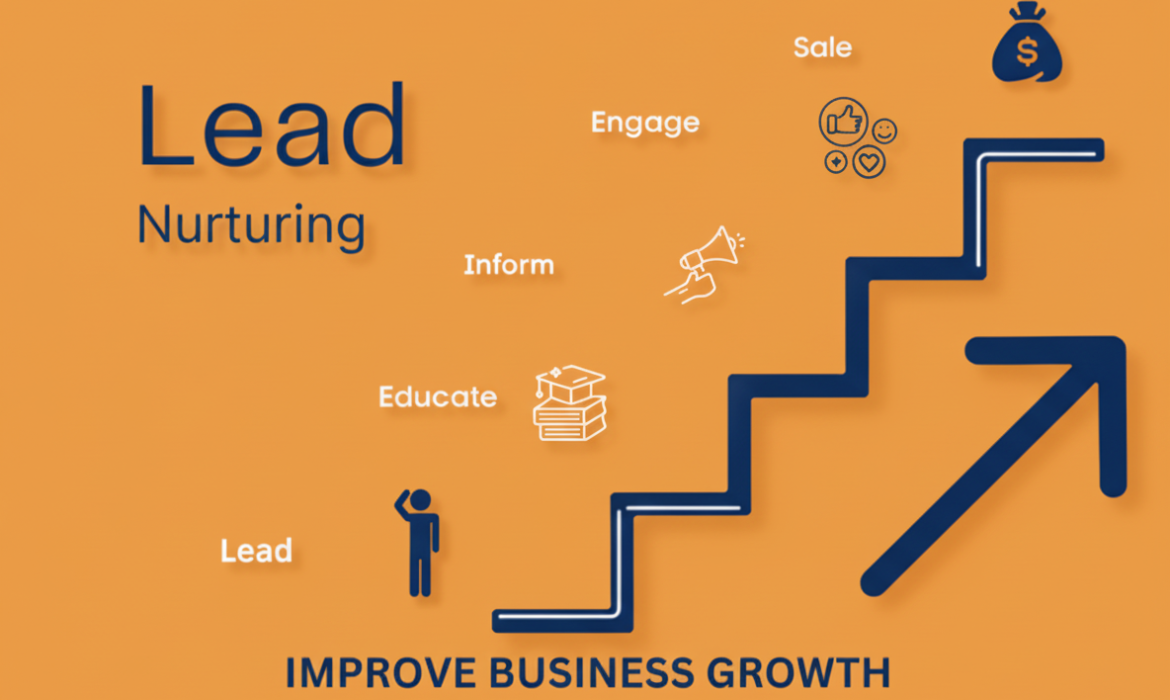
Lead Nurturing Strategies: How to Boost Conversions and Business Growth
“People don’t buy what you do; they buy why you do it.”
— Simon Sinek
Did you know that nurtured leads result in 50% more sales-ready prospects at 33% lower cost, and they make 47% larger purchases compared to non-nurtured leads?
If you’re still treating lead nurturing as an optional marketing tactic, you’re likely leaving opportunities and revenue on the table. The path from capturing attention to closing deals isn’t a sprint; it’s a carefully guided journey. This is where strategic lead nurturing transforms passive interest into committed customers.
Let’s explore how modern lead nurturing, powered by multi-channel tactics, data-backed personalization, and automation, can fuel sustainable business growth.
What Is Lead Nurturing?
Lead nurturing is the systematic process of engaging prospective customers with relevant, timely content and interactions until they are ready to buy. It uses targeted messaging, multi-channel touchpoints, and behavior- or time-based automation to progress leads from awareness → consideration → decision.
In practice, nurturing intersects three disciplines:
- Content marketing (providing useful information at each stage),
- Marketing automation (delivering the right content at the right time),
- Sales enablement (ensuring qualified leads move smoothly to sales).
Why Lead Nurturing Drives Business Growth
Lead nurturing improves growth in three measurable ways:
- Higher conversion rates: nurtured prospects are more qualified and convert at higher rates.
- Lower acquisition costs: By improving conversion efficiency, you reduce the cost to acquire a customer.
- Larger deal sizes and retention: nurtured relationships build trust and open opportunities for upsell and cross-sell.
Clear, consistent nurture programs shorten sales cycles and improve forecast accuracy. If you want predictable pipeline growth, nurturing is the foundation.
Core Principles of Successful Lead Nurturing
Before building workflows, embed these principles into your program:
- Relevance: Always match content to the lead’s pain, role, and stage.
- Cadence (not frequency): Maintain consistent contact without spamming quality over quantity.
- Personalization: Use role or firmographic data to tailor messaging.
- Measurement: Decide KPIs up front and instrument them.
- Alignment: Coordinate marketing and sales on definitions, handoffs, and SLAs.
Keep these principles visible – they guide decisions when you create content, set automation logic, or prioritize accounts.
How to Build an Effective Lead Nurturing Program
Step 1 – Define your ICP and buyer stages
Action items:
- Document your Ideal Customer Profile (ICP): industry, company size, revenue band, geography, and typical job titles involved in purchase decisions.
- Map buyer stages: Awareness, Consideration, Decision, and Post-Purchase (onboarding/expansion).
Why it matters: Without ICP and stage clarity, messaging will be generic and ineffective.
Step 2 – Audit and map existing content to the journey
Action items:
- Inventory your content (blog posts, ebooks, case studies, webinars, videos).
- Create a content map: assign each asset to a buyer stage and persona.
Outcome: You’ll quickly see content gaps (e.g., no decision-stage ROI pieces) and know what to create first.
Step 3 – Segment your leads for targeted outreach
Common segmentation criteria:
- Role (e.g., CTO vs. Head of Ops)
- Company size
- Industry
- Behavior (pages visited, downloads, webinar attendance)
- Lead source (organic, paid, event)
Example: A lead from a healthcare domain who downloaded a compliance whitepaper needs different nurture content than a retail IT lead who watched a product demo.
Step 4 – Build lead scoring that drives handoffs
A simple scoring model:
- +10 points: Attended a webinar
- +8 points: Opened 5+ emails in 30 days
- +15 points: Requested pricing/demo
- -5 points: Unsubscribed from newsletter
Define a threshold (e.g., 70 points) where marketing auto-notifies sales to initiate human outreach. Review and refine scores monthly based on conversion data.
Step 5 – Design nurture streams and automation workflows
Create 3–5 core nurture streams by persona & stage. Each stream contains 6–10 touchpoints (email + supporting channel). Example: Awareness stream (6 weeks):
- Day 0 — Welcome email + overview
- Day 3 — Thought leadership article (pain context)
- Day 10 — Short case study (relevance proof)
- Day 18 — Educational webinar invite
- Day 25 — ROI calculator offer (interactive)
- Day 35 — Demo invitation/sales outreach
Include behavioral triggers: if a lead clicks the ROI calculator, escalate to a “high intent” stream with an immediate sales alert.
Step 6 – Create content tailored to each touchpoint
Content types to consider:
- Awareness: Industry reports, problem-centric blog posts, short videos.
- Consideration: Case studies, whitepapers, product comparisons, webinars.
- Decision: ROI calculators, tailored demos, testimonial bundles, free trials.
Tip: For decision-stage content, use account-specific case studies and metrics they reduce friction.
Step 7 – Use multi-channel engagement
Don’t rely solely on email. Combine:
- Email (primary nurture channel)
- Retargeting ads (brand recall)
- LinkedIn outreach or sponsored content (B2B targeting)
- Web personalization (dynamic landing pages)
- Events/webinars (deep engagement)
Synchronized messages across channels feel cohesive and increase trust.
Step 8 – Personalization at scale (practical tactics)
Use dynamic fields and conditional content in emails and landing pages. Examples:
- Subject line: “How [Company] can reduce onboarding time by 30%”
- Email open line: “Hi [First name], I noticed you downloaded our security checklist – here’s a quick case study… ”
Advanced: use intent data and site behavior to swap hero content on landing pages (if the user viewed pricing, show condensed ROI).
Step 9 – Test, measure, and iterate
A/B tests to run:
- Subject lines (personalized vs. generic)
- Email length (short vs. long)
- CTA types (demo vs. ROI calculator)
- Send times and cadences
Key metrics:
- Open and click-through rates (engagement)
- MQL → SQL conversion rate (handoff quality)
- Lead → Opportunity conversion (pipeline impact)
- Time to conversion (sales cycle length)
- Customer Acquisition Cost (CAC) and Lifetime Value (LTV) improvements
Use these insights to refine messaging, timing, and scoring.
Practical Examples & Ready-to-Use Templates
Sample 1 – Welcome Email (short, day 0)
Subject: Welcome, [First name] – resources you’ll find useful
Body:
Hi [First name],
Thanks for downloading “[Asset title].” I thought you might also find this short case study useful: [link]. If you’d like, I can schedule a 15-minute chat to understand your priorities.
Best,
[Sender name], [Title]
Sample 2 – Mid-Stage Case Study Email (day 10)
Subject: How [Peer Company] cut costs by 20% – short read
Body:
Hi [First name],
When [Peer Company] faced [pain point], they implemented [solution]. Within 6 months, they reduced [metric] by 20%. I’ve attached the two-page case study, which highlights the approach, timeline, and results. Would you like a personalized breakdown for [Company]?
Regards,
[Sender]
Sample 3 – Re-engagement Email (30+ days no activity)
Subject: Still relevant: [Topic] – worth a quick look?
Body:
Hi [First name],
We haven’t heard back on whether priorities have shifted. I understand. If you’re still exploring [topic], here’s a quick checklist that helps you assess readiness: [link]. If not, would you like to pause these emails?
Thanks,
[Sender]
Common Mistakes (and How to Fix Them)
- Over-emailing leads
Fix: Set cadence caps and use engagement decay logic (slow down after 3 unopened emails). - Generic content for all stages
Fix: Audit and map content to journey stages; produce 2–3 decision-stage assets immediately. - No defined handoff to sales
Fix: Publish a Service Level Agreement (SLA) between marketing and sales: lead qualification rules, response times, and feedback loop. - Ignoring mobile experience
Fix: Design all emails and landing pages mobile-first and run tests on devices.
Tools & Tech Stack (practical shortlist)
- Marketing Automation / ESP: HubSpot, Marketo, Pardot, ActiveCampaign
- Account/Intent Data: 6sense, Bombora, ZoomInfo, Clearbit
- Web Personalization: Optimizely, VWO, Unbounce (for dynamic landing pages)
- Ad Retargeting: LinkedIn Matched Audiences, Google Display
- Analytics / BI: Google Analytics, Looker, HubSpot Reports
Choose tools that integrate with your CRM to keep data unified.
Example 8-Week Nurture Campaign (timeline)
Week 1: Welcome email + blog digest
Week 2: Problem-focused article + soft CTA
Week 3: Case study (similar company) + mid-stage survey
Week 4: Webinar invite (value-based)
Week 5: Webinar follow-up + ROI calculator
Week 6: Personalized video or one-pager for decision-makers
Week 7: Pricing explainer/demo CTA
Week 8: Direct sales outreach for leads above score threshold
This cadence mixes content, events, interactive tools, and sales touches to move prospects forward efficiently.
Measurement Framework – What to Track Weekly vs Monthly
Weekly:
- New leads entered to nurture streams
- Email open and CTR per stream
- Number of leads crossing scoring thresholds
Monthly:
- MQL → SQL conversion rate
- Average time in funnel
- CAC by channel (after nurture)
- Revenue influenced by nurture
Quarterly:
- LTV by cohort
- Program ROI (revenue influenced ÷ program cost)
Final Checklist Before Launching Your First Program
- ICP and buyer stages documented
- Content mapped and gaps identified
- 2–3 decision-stage assets created
- Lead scoring rules and thresholds set
- Automation workflows built and tested
- Sales SLA is published and agreed
- Multi-channel plan (email + LinkedIn + retargeting) ready
- Analytics dashboards set up for weekly monitoring
Conclusion
Lead nurturing is not a side activity; it is the engine that converts interest into measurable revenue. When you combine disciplined segmentation, targeted content mapped to the buyer’s journey, automation, and close sales-marketing alignment, you create a repeatable system that reduces CAC, shortens sales cycles, and increases average deal value.
I hope you find the above content helpful. For more such informative content, please visit SalesDemand.
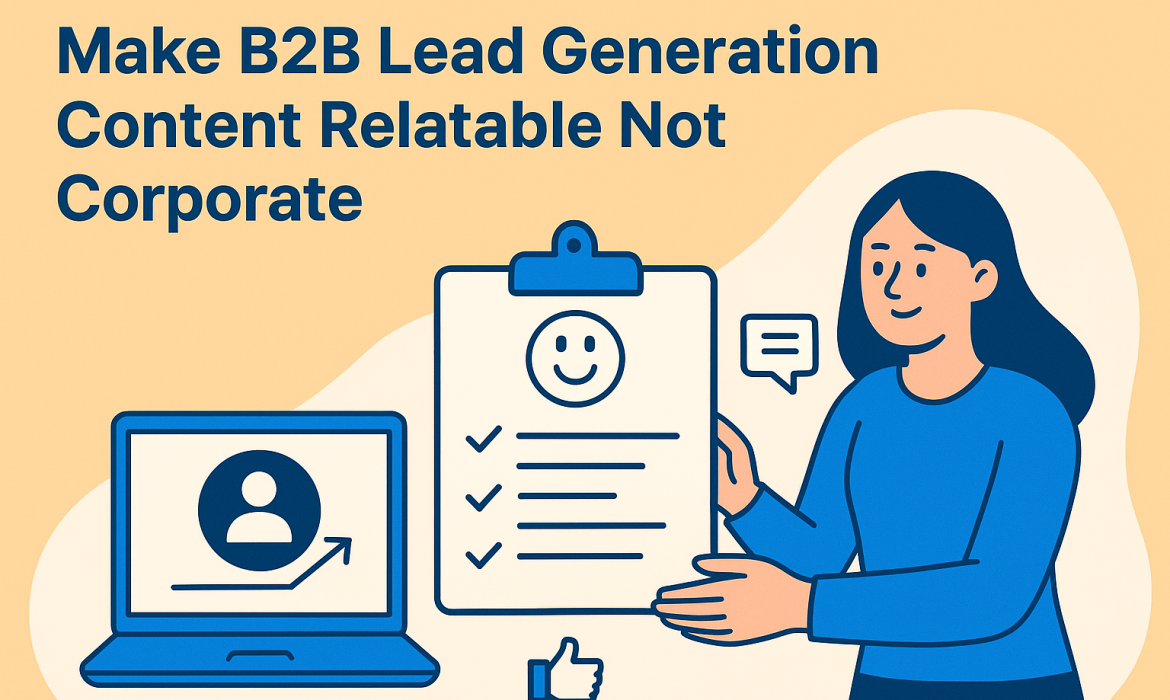
Make B2B Lead Generation Content Effective, Not Corporate
Why “Corporate-Sounding” B2B Content Doesn’t Convert
Too much B2B content sounds like a policy manual. The facts are right, but the tone is lifeless. Buyers don’t connect with companies; they connect with people. And when content feels robotic, conversions drop
That’s the problem with most B2B lead generation content. It’s written for “companies” instead of the people who make buying decisions. The result? Content that’s technically correct but emotionally disconnected.
Here’s the reality: every B2B buyer is a human first. They have KPIs and business goals, sure. But they also have emotions, fear of making the wrong choice, frustration with broken processes, and a strong desire to be seen as innovative.
If your content ignores the human side, you’ll lose attention (and leads). If you humanize your content, you’ll build trust, connect with decision-makers, and drive higher-quality conversions.
Below, we’ll explore 8 proven strategies that transform stiff B2B lead generation content into engaging, conversion-focused storytelling.
1# Start With Buyer Emotions, Not Just Pain Points
Traditional personas often stop at surface-level pain points like “reduce costs” or “improve efficiency.” But in real life, business decisions are also emotional.
Think about it:
- A CMO might be frustrated with campaigns that generate clicks but not qualified leads.
- A sales leader might feel stressed about pipeline targets slipping away.
- A marketing ops manager might be worried about the accuracy of their lead database.
Why this matters: Content that acknowledges emotions creates instant relatability.
Instead of: “Our solution reduces data errors by 20%.”
Try: “Tired of wasting hours cleaning spreadsheets? Here’s how to fix it once and for all.”
Pro Tip: Write down one emotional hook for each piece of lead generation content. Use it in the intro or CTA to grab attention fast.
2# Speak Like a Colleague, Not a Vendor
Too much B2B content drowns in buzzwords. Sentences like “synergize scalable frameworks for optimal ROI” impress no one.
Your readers don’t want a pitch; they want clarity.
Guidelines for a conversational tone:
- Use short sentences (under 20 words).
- Replace jargon with everyday phrases.
- Write like you’re explaining a concept to a colleague over coffee.
Example rewrite:
- Vendor-speak: “Our AI-driven platform maximizes MQL throughput.”
- Human-speak: “We use AI to help your reps spend less time chasing bad leads.”
When content feels natural, buyers are more likely to stay engaged and take action.
3# Turn Case Studies Into Relatable Stories
Case studies are gold in lead generation, but most read like research reports: flat, technical, and impersonal.
Instead, frame them as stories with a clear beginning, middle, and end.
Storytelling framework:
- The Hero → Who is the client?
- The Struggle → What challenge did they face?
- The Turning Point → How was the solution applied?
- The Happy Ending → What results did they achieve?
Example:
A SaaS company struggled with duplicate leads. Sales reps wasted 15 hours weekly cleaning spreadsheets instead of closing deals. After implementing our CRM + Data Cleaning Services, they cut wasted hours by 70% and hit pipeline goals within one quarter.
Notice how this version feels human and relatable, not just statistical.
4# Make Your Content Scannable
Decision-makers don’t read blogs word-for-word; they scan. If your content is presented as a dense wall of text, you’ll lose them.
Here’s how to design content for scanners:
- Use numbered lists.
- Add bullet points for steps or takeaways.
- Bold key phrases so they pop out at a glance.
- Keep paragraphs short (2–3 sentences).
Pro Tip: Think of your blog post as a landing page. If readers can get the main idea in 30 seconds of skimming, you’ve done it right.
5# Blend Data With Relatable Analogies
Numbers establish credibility, but they can also feel cold. Analogies bridge the gap between data and real understanding.
- Data alone: “61% of marketers say lead quality is their biggest challenge.”
- Data + analogy: “Think of it like fishing in the wrong pond. Six out of 10 marketers feel they’re casting nets all day but catching empty shells.”
This technique makes complex insights memorable and easy to share.
6# Add Visual and Interactive Elements
Words alone can’t always carry the message. Visuals make content more engaging and digestible.
Options include:
- Infographics to simplify multi-step processes
- Screenshots of dashboards, workflows, or campaign results
- Short videos or GIFs embedded into blogs
- Interactive tools (e.g., ROI calculators, checklist downloads)
Pro Tip: Incorporate customer quotes as pull-out graphics. A one-sentence testimonial like “This solution saved us 12 hours a week” stands out more than a paragraph of self-praise.
7# Build Trust Through Micro-Moments
Trust in B2B isn’t built through one big case study; it’s reinforced in small, consistent ways.
Examples of credibility-building micro-moments:
- Citing third-party research from Gartner, Forrester, or industry leaders
- Embedding mini-wins like “Cut lead response time from 12 hours to 3”
- Adding author bios that showcase subject-matter expertise
- Sprinkling in client logos or testimonials across blogs
Each of these adds subtle proof points that reassure readers they’re in good hands.
8# End With Human-Centered CTAs
Most CTAs sound robotic: “Submit form.” “Request demo.” That doesn’t inspire action.
Instead, make CTAs specific and benefit-driven:
- Instead of: “Download case study” → “See how a SaaS firm doubled SQLs in 90 days.”
- Instead of: “Book a demo” → “Let’s talk about your pipeline goals no slides, just solutions.”
Placement tip:
- Use a soft CTA mid-article (e.g., “Learn more about our Lead Generation Services”).
- Close with a strong CTA that ties back to the reader’s challenge.
Bonus Strategies to Go Even Further
1. Use Social Proof Across Content
Buyers trust peers more than vendors. Include logos, client quotes, or “X companies trust us” banners to reinforce credibility.
2. Personalize Nurture Follow-Ups
When someone downloads a guide, don’t send a generic email. Reference the specific content they engaged with: “Since you read our piece on cleaning CRM data, here’s a checklist to help you audit your system.”
This shows attentiveness and improves conversion from content → sales conversations.
Conclusion: People Buy From People
B2B buyers may have complex needs and long sales cycles, but at the end of the day, they’re still people who respond to clarity, empathy, and trust.
When you humanize your lead generation content, you’re not dumbing it down; you’re making it resonate. You’re showing prospects that you understand their struggles, value their time, and can help them achieve meaningful wins.
Book a Strategy Call today and see how our Lead Generation Services can help you turn conversations into conversions.
Proven Strategies to Maximize ROI with Targeted ABM Content
“Marketing is no longer about the stuff you make, but the stories you tell.”
– Seth Godin
Did you know that 87% of B2B marketers say Account-Based Marketing (ABM) delivers higher ROI than any other marketing strategy? In today’s business world, decision-makers are bombarded with generic emails, cold calls, and one-size-fits-all campaigns. The truth is, mass marketing no longer resonates with high-value accounts.
To stand out, B2B companies must move beyond volume-driven campaigns and invest in targeted ABM content hyper-personalized marketing assets designed to engage decision-makers at the right time, in the right way.
This blog explores proven methods to leverage ABM content for driving better ROI, with practical tips, real-world examples, and the latest trends.
1# What is Targeted ABM Content?
Targeted ABM content refers to marketing assets designed specifically for a defined set of high-value accounts, rather than a broad audience. Unlike generic B2B content that aims to attract traffic in volume, targeted ABM content is crafted with precision; it speaks directly to an account’s industry, business model, decision-makers, and unique challenges.
For example, instead of publishing a one-size-fits-all whitepaper, a company might create a customized executive report for a handful of enterprise accounts, highlighting market trends that directly impact them. This level of exclusivity transforms content from a passive information piece into a strategic tool for influence and relationship-building.
Simply put, targeted ABM content is about quality over quantity: fewer assets, more personalization, and a stronger focus on driving measurable results within carefully chosen accounts.
2# Examples of Targeted ABM Content:
- Personalized Industry Briefings: Research-backed insights tailored to a specific vertical.
- One-to-One Email Sequences: Carefully written campaigns addressing account-level goals.
- Co-Branded Content: Whitepapers or reports created in collaboration with the target account to boost credibility.
- Executive LinkedIn Posts: Custom thought-leadership crafted to engage leaders within the target company.
- Account-Specific ROI Dashboards: Interactive tools showing potential savings or revenue impact for that account.
3# Why ABM Content is Essential for Modern B2B Growth
1. Precision Over Volume
Traditional demand generation is about reaching as many people as possible. But ABM flips the funnel, focusing instead on a smaller pool of high-value accounts. The content is personalized, relevant, and designed to convert specific targets rather than the masses.
2. ROI Advantage
- Companies using ABM report 48% more revenue per account and 30% higher marketing-attributed revenue.
- ABM-driven organizations experience up to 40% shorter sales cycles because the buying journey feels tailored.
3. Sales-Marketing Synergy
Unlike traditional marketing, ABM forces sales and marketing teams to work together. The content strategy is aligned with sales insights, ensuring every touchpoint builds trust and moves accounts toward conversion.
Method 1: Invest in High-Quality, Data-Driven Targeting
ABM content is only as good as the accounts you target. Poor data leads to wasted resources and irrelevant outreach.
Steps to Improve Targeting
- Use Intent Data: Platforms like Bombora, 6sense, or LinkedIn Insights reveal which accounts are actively researching your solution.
- Segment by Buying Stage: Early-stage accounts may prefer thought leadership, while late-stage buyers need ROI calculators or case studies.
- Enrich Databases: Tools like ZoomInfo or Clearbit help refine contact details, roles, and firmographics.
Pro Insight: Companies leveraging intent data have reported 3X higher engagement rates compared to those relying on static lists.
Method 2: Craft Hyper-Personalized ABM Content
Personalization is the backbone of ABM. Instead of generic blogs or guides, ABM content is tailored for a specific account, industry, or even decision-maker.
Content Ideas for Personalization
- Account-Specific Case Studies: Showcase how you solved challenges for similar companies in their industry.
- Custom Landing Pages: Design pages addressing unique pain points for each account.
- Executive Briefs: Deliver short, value-driven reports written for C-suite leaders.
- Video Messages: Personalized video introductions have 5X higher engagement than plain emails.
Example: Instead of sending a generic eBook to a logistics company, send a custom case study showing how your solution optimized supply chain efficiency for a peer company.
Method 3: Adopt an Omnichannel ABM Strategy
Relying on one channel is risky. B2B buyers interact across multiple platforms; your ABM content should follow them seamlessly.
Effective Channels for ABM Content
- Email Marketing: Triggered, account-specific campaigns.
- LinkedIn Campaigns: Sponsored posts or InMail targeted to decision-makers.
- Events/Webinars: Invite-only roundtables create exclusivity.
- Display Ads & Retargeting: Keep your brand visible throughout the buying journey.
Stat: B2B brands using at least 3 channels in ABM campaigns see 35% higher engagement rates compared to single-channel approaches.
Method 4: Use AI & Automation to Scale Personalization
AI has made ABM scalable without losing the personal touch.
How AI Enhances ABM Content
- Dynamic Content: AI customizes subject lines, visuals, and CTAs based on user behavior.
- Predictive Analytics: Identifies accounts most likely to convert soon.
- Chatbots: Provide instant, personalized responses to high-value prospects.
Stat: 79% of companies using AI in ABM have increased revenue, proving automation drives measurable ROI.
Check out our latest blog to learn more about how AI is transforming lead generation: AI-powered Lead Generation.
Method 5: Create Content for Every Stage of the Buyer’s Journey
Target accounts are rarely ready to buy immediately. ABM content should nurture them across the funnel:
- Awareness Stage: Blogs, industry reports, and thought-leadership content.
- Consideration Stage: Case studies, comparison guides, and webinars.
- Decision Stage: ROI calculators, personalized demos, and testimonials.
Pro Insight: Mapping ABM content to buyer stages increases lead-to-opportunity conversion rates by up to 25%.
Method 6: Align Sales and Marketing on ABM Content
One of the biggest ABM success factors is tight sales-marketing alignment.
Best Practices for Alignment
- Shared KPIs: Instead of vanity metrics, focus on pipeline velocity, deal size, and account engagement.
- Content Co-Creation: Sales should provide input on FAQs, objections, and pain points to shape ABM assets.
- Weekly Syncs: Regular alignment meetings ensure campaigns remain relevant.
Example: A SaaS firm aligned sales and marketing on ABM messaging and saw a 40% increase in deal velocity within 6 months.
Method 7: Leverage Interactive & Multimedia Content
Static PDFs no longer cut it. B2B buyers crave engaging, interactive content.
Interactive ABM Content Formats
- ROI calculators customized for each account.
- Interactive infographics with account-specific data points.
- Personalized video explainers.
- Interactive microsites designed for high-value accounts.
Stat: Interactive content generates 2X more engagement than static formats in ABM campaigns.
Method 8: Measure, Analyze, and Optimize ABM Content
ABM success isn’t just about content creation; it’s about measuring what works.
Key Metrics for ABM Content ROI
- Engagement Rate per Account (clicks, time spent, responses).
- Pipeline Velocity (how fast accounts move through the funnel).
- Deal Size Growth (average revenue per account).
- Win Rate Increase (percentage of targeted accounts converted).
Pro Insight: ABM leaders who continuously optimize campaigns see up to 50% higher revenue growth compared to laggards.
4# Real-World Case Snapshot: SaaS ABM Success
A mid-sized SaaS provider wanted to target Fortune 500 firms. Instead of mass campaigns, they launched a 3-month ABM program:
- Identified 50 high-value accounts using intent data.
- Built custom microsites with tailored content.
- Ran LinkedIn ABM campaigns with personalized InMail outreach.
- Nurtured accounts with executive briefs and exclusive webinars.
Results:
- 3X engagement compared to generic campaigns
- 40% shorter sales cycles
- 2X larger average deal size
Conclusion
Targeted ABM content is becoming essential for B2B companies that want better results. By focusing on the right accounts and creating content that speaks directly to their needs, businesses can move away from generic outreach and build stronger, more meaningful engagement.
Personalized content helps you address each account’s goals, challenges, and buying stage. When sales and marketing work together and track performance regularly, ABM content can drive higher engagement, faster deal movement, and stronger ROI.
In a competitive market, companies that invest in clear, personalized ABM strategies will stand out, build better relationships, and achieve more consistent growth.
I hope you find the above content helpful. For more such informative content, please visit SalesDemand.
FAQs:
1. What is targeted ABM content?
Targeted ABM content is purpose-built marketing material designed for specific high-value accounts. It is personalized based on an account’s industry, challenges, priorities, and buying intent to improve engagement and conversion outcomes.
2. How does ABM content differ from traditional content marketing?
Traditional content is created for broad audiences, while ABM content focuses on a selected group of strategic accounts. ABM prioritizes relevance and personalization, ensuring that each piece of content directly aligns with the target account’s business needs and stage in the buyer journey.
3. Which content formats are most effective in ABM?
Effective ABM content formats include personalized case studies, tailored whitepapers, custom landing pages, industry-specific reports, executive briefs, account-focused emails, and personalized video messages. The choice of format depends on the target account’s stage and the communication channel.
4. How can organizations measure the impact of their ABM content?
Measurement should focus on account-level performance, including engagement from key stakeholders, progression through the pipeline, deal velocity, deal size, and overall contribution to closed-won revenue. These metrics provide a clearer view of ABM’s influence on ROI.
5. Do I need advanced technology to implement targeted ABM content?
While ABM platforms and AI tools can enhance targeting and scalability, they are not mandatory to get started. A structured strategy, high-quality insights, and strong collaboration between sales and marketing form the core foundation of successful ABM execution.
8 Data-Driven Lead Strategies to Accelerate B2B Growth in 2025
Imagine if you could predict exactly which prospects are ready to buy before they even speak to your sales team.
That’s the power of a data-driven lead strategy. In today’s hyper-competitive B2B industry, gut feelings and guesswork are not enough. Companies that utilize real-time data, AI-driven insights, and measurable metrics are closing more deals, faster, and at a lower cost per acquisition.
Research shows that businesses using data effectively are 23× more likely to acquire customers, 6× more likely to retain them, and 19× more likely to be profitable. The message is clear: decisions backed by data don’t just improve lead quality, they transform the entire sales pipeline.
In this blog, we’ll explore eight proven strategies to help B2B professionals not just collect data but turn it into a high-performing lead generation engine that drives measurable business growth.
1# Why a Data-Driven Lead Strategy Matters
Firstly, data-driven organizations experience significantly better outcomes, leading to greater efficiency and predictability in acquiring and retaining clients. For example, companies that effectively nurture leads generate 50% more sales-ready leads at 33% lower cost. Meanwhile, marketing automation yields a 451% increase in qualified leads. These statistics highlight how aligning strategy around data-driven lead insights yields both volume and quality improvements.
1. Leverage AI-Driven Insights for Smarter Lead Generation
Artificial intelligence is now standard for modern B2B strategies. In 2025, over 75% of enterprises use AI in marketing operations, and 63% of companies using AI-powered lead scoring report significant improvements in lead quality. Real-world users report 50% increases in leads and appointments, a 40% jump in conversion rates, and up to 30% uplift when enriching lead data with AI tools.
71% of organizations regularly deploy generative AI (GAI) for content production and outreach personalization. Nearly 90% of marketers utilize GAI daily. Together, these capabilities mean that data-driven lead generation now hinges on harnessing AI-powered personalization and predictive analytics to scale performance efficiently.
2. Prioritize Quality Over Quantity: High-Intent Leads Win
Instead of focusing on sheer volume, successful B2B performers emphasize quality leads. 70% of marketers prioritize high-quality leads over quantity. Only 27% of leads are sales-ready when first captured, underscoring the importance of effective nurturing.
When companies adopt strong lead-nurturing programs, they generate 50% more sales-ready leads at significantly lower cost and benefit from leads that spend 47% more than non-nurtured ones. These outcomes speak directly to the efficiencies of a data-driven lead methodology.
3. Power Lead Generation with Strategic Content Marketing
Content marketing remains a cornerstone of effective data-driven lead generation. Recent data reveal that content marketing:
- Generates 3× more leads than traditional outbound methods while costing 62% less,
- Enables companies with active blogs to capture 68% more leads.
- It is relied upon by 87% of marketers for generating leads and nurturing audiences.
Further, video content stands out: 58% of B2B marketers name it as the most effective type for lead generation. Consistently, content remains a highly trusted channel for organic traffic and conversion.
4. Optimize SEO and Organic Reach
Search engine visibility remains a key vector for data-driven lead capture. Notable findings include:
- Organic search drives 53% of all B2B website traffic.
- Businesses investing in SEO see 14× more leads than those relying on paid ads.
- About 57% of B2B marketers say SEO generates more leads than any other initiative; SEO accounts for 14.6% of all B2B leads.
- A typical B2B buyer conducts 12 searches before purchase, making SEO optimization crucial.
By optimizing on-page structure, technical SEO, keywords, and featured snippets, businesses enhance their ability to attract high-intent prospects through search.
5. Utilize Multi-Channel & Social Strategies
Instead of relying on single-channel outreach, multi-channel marketing offers superior ROI. Multi-channel campaigns achieve a 31% lower cost per lead than single-channel initiatives. Social platforms are critical too 68% of marketers say social media helps generate leads, and LinkedIn dominates B2B, used by 79–89% of marketers for lead generation.
Social media closely rivals search as a source of B2B leads, with around 20% of marketers naming social as their top lead source vs. 27% for search. Video, interactive content, and retargeting further enhance engagement, while paid LinkedIn ads convert 2.5× better than other social platforms.
6. Strengthen Lead Nurturing & CRM Automation
Automation not only improves efficiency, it transforms outcomes. Companies using marketing automation experience a 451% increase in qualified leads. Lead-nurturing emails deliver 4–10× more responses vs. single blasts, and nurtured leads result in 20% more sales opportunities.
Integrating lead scoring, nurturing emails, and CRM creates a feedback-driven, data-driven lead system satisfying both marketing and sales teams. Businesses that align sales and marketing grow revenue 24% faster. This synergy strengthens conversion velocity and predictability.
7. Embrace ABM and Intent-Based Targeting
Account-Based Marketing (ABM) is now mainstream. Companies using ABM strategies generate 208% more revenue from marketing efforts and enjoy a 30% reduction in sales cycle length. ABM also improves client relationships by 56% and strengthens retention and upsell strategies.
Coupled with intent data and predictive AI, ABM helps B2B marketers deliver hyper-targeted content and outreach that resonates with specific accounts, fulfilling the promise of a data-driven lead model at scale.
8. Leverage Real-World Validation and Social Proof
No data-driven strategy is complete without credibility. While not strictly statistical, social proof from testimonials to industry endorsements reinforces brand reliability and helps convert leads.
Anecdotal insights enrich this approach. For instance, one B2B marketer shared:
“Using AI to analyze prospect websites and LinkedIn profiles for hyper-personalized outreach boosted our response rate from ~3% to nearly 12% almost overnight”.
Another emphasized that while AI expedites outreach, warm, human follow-up still delivers the highest conversions. These real voices underscore how data-driven lead generation thrives when automation complements, not replaces, personal connection.
2# Practical Examples of Data-Driven Lead Strategies in Action
Example 1: AI-Enhanced Prospecting
A SaaS company uses AI to monitor competitor product reviews, identifying dissatisfied customers. Outreach emails offering a free migration trial achieved a 15% response rate.
Example 2: Behavioral Retargeting
An IT service provider retargeted visitors who abandoned pricing pages with case studies about cost savings, resulting in a 22% lift in conversions.
3# Common Mistakes to Avoid in Data-Driven Lead Generation
- Chasing vanity metrics instead of sales-qualified leads.
- Ignoring data hygiene—outdated or duplicate records waste the budget.
- Over-automation—losing the human touch in messaging.
- Not testing landing pages, subject lines, or CTAs regularly.
4# Key Metrics to Track for Continuous Optimization
To keep your data-driven lead system efficient, monitor:
- Lead-to-customer conversion rate.
- Cost per qualified lead (CPQL).
- Marketing qualified leads (MQL) to sales qualified leads (SQL) ratio.
- Average deal size and revenue per lead.
5# Future Trends to Watch
Looking ahead:
- Predictive lead scoring will become more accurate as AI models evolve.
- Voice search optimization may impact B2B content strategies.
- Privacy-first marketing will grow in importance with stricter data laws.
Conclusion
A modern, data-driven lead strategy integrates AI-powered personalization, smart content creation, multi-channel SEO and social tactics, ABM, and nurturing flows all underpinned by measurable analytics. Together, these eight strategies form a robust ecosystem that fuels both high-quality lead generation and conversion optimization.
As B2B professionals, whether marketers, business leaders, or decision-makers, your path to growth lies in embracing these trends. Harness AI, invest in nurturing, optimize every channel, and preserve human connection. Continuously measure, adapt, and refine. By doing so, your data-driven lead generation won’t just survive, it will grow in 2025 and beyond.
I hope you find the above content helpful. For more such informative content, please visit SalesDemand.

How B2B Buyers Choose Cybersecurity Solutions in 2025
“Security is not a product, but a process.”
— Bruce Schneier
In a time where one phishing email can shut down operations and a single breach can spark financial ruin, cybersecurity has moved from IT backrooms into the C-suite. Today, it’s no longer just about protecting data; it’s about enabling business continuity, building trust with stakeholders, and meeting increasingly complex compliance demands.
According to Gartner, global cybersecurity spending is projected to reach $213 billion in 2025, up from $193 billion in 2024, as organizations race to secure cloud workloads, combat AI-driven threats, and comply with tougher regulations. But with hundreds of vendors in the market, how do B2B buyers decide which cybersecurity solution is worth their investment?
Understanding what drives these decisions can help cybersecurity vendors fine-tune their offerings and messaging, turning prospects into long-term partners.
1# Business Risk Mitigation and Regulatory Compliance
First and foremost, B2B buyers are risk managers. Protecting sensitive data, maintaining operational uptime, and staying compliant are their top mandates.
Why it matters:
A single ransomware attack can cause millions in damages, not just in recovery costs but in customer churn and long-term reputational harm.
What buyers are prioritizing:
- End-to-end encryption for sensitive customer data
- Compliance with frameworks like GDPR, HIPAA, ISO 27001, and NIST
- Sector-specific needs (e.g., PCI DSS for e-commerce, FINRA for financial services)
- Built-in auditing and reporting features for easier compliance verification
Example: A fintech startup scaling rapidly across geographies may prioritize vendors who can offer region-specific data residency, ensuring they’re compliant with both EU GDPR and California’s CCPA.
2# Demonstrated ROI and Cost Predictability
Cybersecurity has evolved into a strategic business priority. Buyers are now expected to justify every line item, including security tools.
What they evaluate:
- Whether the tool lowers breach risks (and thus, financial liabilities)
- How does it help reduce internal headcount or redundant tasks
- Whether it allows the company to meet customer SLAs more efficiently
- If the vendor offers transparent, scalable pricing tiers for future growth
Stat to Note: According to Forrester, 59% of B2B tech buyers consider predictable pricing and measurable ROI critical in vendor selection.
Bonus Tip for Vendors:
Bundle cost calculators and ROI benchmarks in the sales cycle. Help buyers make a data-backed case internally.
3# Scalability and Infrastructure Flexibility
No two businesses grow at the same pace, and buyers want solutions that grow with them, not slow them down.
What B2B buyers look for:
- Cloud-native or hybrid options (especially for companies adopting remote-first policies)
- API-first architecture that integrates with existing SIEM, CRM, and productivity tools
- Seamless onboarding for new users, offices, or geographies
- Multi-tenancy for MSPs or enterprises managing different units
Scenario: A global marketing agency may need role-based access across regions and departments while maintaining centralized control over data governance.
4# Technical Capabilities and Innovation
With the sophistication of threats like deepfake phishing and AI-generated malware, the bar for technical capabilities has risen sharply.
Features that influence purchase decisions:
- Real-time threat intelligence and behavior-based detection
- Zero Trust architecture and endpoint security
- Automated incident response and containment
- Advanced AI/ML threat hunting capabilities
- Support for DevSecOps and cloud workload protection
Buyers often ask: “What are you doing to protect us against threats we don’t even know about yet?”
Pro tip for vendors: Maintain a public roadmap or changelog. Transparency around innovation builds trust.
5# Vendor Credibility and Market Reputation
When B2B buyers shortlist cybersecurity vendors, they look beyond glossy brochures; they want proof.
What earns trust:
- Gartner Magic Quadrant or Forrester Wave placement
- Real-world case studies and testimonials
- Technical certifications (e.g., SOC 2, ISO 27001, CSA STAR)
- Experience with companies of similar size or industry
- Media presence and thought leadership
Real Insight: Peer influence is powerful. A positive reference from an industry peer often closes the deal faster than any sales demo.
6# Support, Onboarding, and Responsiveness
Once the contract is signed, the real test begins. The onboarding experience and customer support determine long-term satisfaction.
Non-negotiables for B2B buyers:
- 24/7 support availability (especially across time zones)
- A responsive and knowledgeable account manager
- Onboarding that includes custom implementation plans
- Access to rich documentation and training resources
- Periodic security health checks and reviews
7# Strategic Alignment and Industry Understanding
Modern buyers want more than just technology; they seek partnerships. Vendors who understand the buyer’s vertical and speak their language gain instant credibility.
What they assess:
- Has the vendor served similar businesses before?
- Can they offer consultation beyond the product?
- Do they customize solutions based on use case or risk profile?
- Do they respect company culture and governance practices?
Tip: Show, don’t tell. Use vertical-specific demos, or co-author whitepapers for buyer industries like fintech, edtech, or healthcare.
8# Ease of Use and Internal Adoption
Even the most powerful cybersecurity solution can fall flat if it’s too complex to use. B2B buyers must ensure that their internal teams, from IT to HR, can easily adopt and manage the system.
What drives usability?
- User-friendly dashboards and visual alerts
- Drag-and-drop policies or intuitive rule builders
- Role-based access controls and mobile app availability
- Seamless updates with zero downtime
User experience is a silent dealbreaker. If it causes friction, internal champions will lose enthusiasm, and renewal may be at risk.
9# Risk Sharing and SLA Guarantees
As cyber threats become costlier, buyers are seeking shared responsibility from their vendors.
What this includes:
- Performance-based SLAs on uptime, detection speed, and response time
- Cyber insurance partnerships or breach liability terms
- In-depth risk assessments pre-implementation
- Proactive threat hunting reports and red team exercises
Example: A large retail enterprise may ask vendors to co-sign breach responsibility clauses, ensuring they walk the talk on security.
10# Vendor Stability and Vision
The cybersecurity space is notorious for rapid M&A activity. Buyers are cautious about vendors who might get acquired, pivot direction, or go bust.
Stability factors:
- Vendor’s funding history and burn rate
- Customer retention rates and logos
- Product roadmap aligned with industry trends
- Transparency around vision and leadership
Buyers want assurance they won’t have to migrate after 12 months. Future stability is a buying signal.
Conclusion: Winning the B2B Cybersecurity Buyer
To win in today’s B2B cybersecurity landscape, it’s not enough to offer superior threat protection. Buyers want vendors who:
- Understand their pain points
- Offer quantifiable business value
- Build trust through transparency and reliability
- Act as partners, not just product providers
The sales journey has shifted from a simple transaction to a consultative, strategic, and continuous process.
As one CISO aptly put it: “I don’t need another dashboard. I need a partner who can make sure I never have to explain a breach to our board.”
I hope you find the above content helpful. For more such informative content, please visit SalesDemand.

Outbound Lead Generation: 10 Key Sales Strategies to Drive B2B Growth
Outbound lead generation remains a cornerstone of growth in the competitive B2B landscape. Unlike inbound marketing, where prospects come to you, outbound strategies require a proactive approach. Your sales team reaches out to potential clients, builds relationships, and guides them through the buyer’s journey.
When executed strategically, outbound lead generation can fuel your pipeline with high-quality prospects and foster long-term business relationships. In this blog, we’ll explore 10 essential sales strategies that will enhance your outbound efforts and drive sustainable growth.
1# Understand Your Target Audience
Success begins with a crystal-clear understanding of your ideal customer. Developing detailed buyer personas allows you to tailor your messaging and outreach to resonate with your audience’s specific pain points.
Tips:
- Identify buyer personas: Document demographics, job roles, company size, goals, and key challenges.
- Research customer behavior: Use tools like Google Analytics, HubSpot, LinkedIn Insights, and Hotjar to gain deeper insights into audience behavior.
- Update personas regularly: B2B customer expectations evolve quickly—revisit and refine your personas every quarter.
Additional Insight:
- Interview current customers to uncover motivations and decision-making processes.
- Analyze CRM and sales data to identify common traits among high-converting leads.
According to HubSpot, companies that exceed revenue goals are 2.4x more likely to use personas.
2# Build a Multi-Channel Outreach Strategy
Relying on a single channel limits your reach. A multi-channel approach engages prospects across various touchpoints and keeps your message top-of-mind.
Channels to Combine:
- Email: Create concise, value-driven subject lines and body copy. Use A/B testing to refine.
- Cold Calling: Directly connect with key decision-makers. Prepare call scripts but keep conversations consultative.
- LinkedIn Outreach: Send personalized InMails, engage with posts, and build rapport through content sharing.
- Direct Mail: For ABM campaigns, send custom gifts or printed content for a memorable impression.
- SMS/Texting: Use cautiously for time-sensitive messages or reminders.
Why It Works: According to Salesforce, combining calls, emails, and social media increases engagement rates by over 40%.
Pro Tip: Map out your outreach cadence using a 10–14 day schedule with alternating channels.
3# Craft Personalized and Value-Driven Messaging
Generic, templated outreach no longer resonates. Today’s B2B buyers expect relevant, contextual messaging that aligns with their challenges and business goals.
Best Practices:
- Do your homework: Mention the lead’s recent achievements, pain points, or competitor activities.
- Offer a solution, not a product: Tie features to outcomes and business value.
- Use storytelling: Narratives, especially through customer success stories, increase relatability and trust.
- Avoid jargon: Keep language clear, concise, and benefits-focused.
Examples of Personalization:
- “I noticed your company recently expanded into APAC. Here’s how we helped another SaaS client streamline cross-border operations.”
- “Your LinkedIn post about reducing churn caught my eye. We’ve worked with similar companies to improve retention by 18%.”
Tool Suggestion: Use LinkedIn Sales Navigator or Apollo.io to gather insights on prospects before writing outreach.
4# Leverage Automation for Scale and Efficiency
Automation enables sales reps to manage outreach at scale without compromising relevance.
Top Platforms:
- HubSpot Sales Hub
- Outreach.io
- Salesloft
- Salesforce Sales Cloud
Key Capabilities:
- Automate email cadences with personalized variables
- Track email open, reply, and click-through rates
- Schedule follow-ups and meeting links
- Trigger actions based on lead behavior (e.g., download = auto email sequence)
Balance Human + Automation: While automation boosts productivity, maintain a human element. Reserve manual outreach for top-tier accounts or later stages in the funnel.
Insight: McKinsey research shows 70% of B2B buyers still prefer human engagement in the final stages of decision-making.
5# Segment and Prioritize Your Leads
Every lead is not equal. Prioritizing prospects based on readiness and relevance ensures you focus on the most promising opportunities.
Segmentation Criteria:
- Industry
- Company size and revenue
- Location
- Lead source or campaign origin
- Engagement level (clicks, downloads, time spent on site)
How to Prioritize:
- Lead Scoring Models: Assign points based on engagement, job role, and intent signals.
- Intent Data: Tools like Bombora and G2 Buyer Intent indicate when companies are researching your solution.
Pro Tip: Regularly audit your segmentation logic to adapt to evolving buyer journeys and market changes.
According to Demand Gen Report, segmented campaigns achieve a 14.31% higher open rate than non-segmented ones.
6# Follow Up Consistently and Strategically
Most sales require 6–8 touches. Yet many reps stop after one or two attempts.
Follow-Up Framework:
- Day 1: Initial email or call
- Day 3: LinkedIn message or connection request
- Day 6: Follow-up email with resource
- Day 9: Call with calendar link
- Day 12: Final email or voicemail
Tactics:
- Use humor or curiosity to increase response in follow-ups
- Provide new value in each touch (e.g., relevant blog, industry news, or case study)
- Include a clear CTA (book a meeting, reply, download a guide)
Tool Tip: Use Calendly or Chili Piper to simplify scheduling.
Insight: InsideSales found that leads contacted within 5 minutes of engagement are 100x more likely to convert.
7# Offer Value Before Pitching the Sale
Modern outbound is about serving, not selling. Establish credibility first.
Ways to Add Value:
- Offer an audit or checklist related to their challenge
- Send personalized video walkthroughs or Loom recordings
- Provide benchmarking data from their industry
- Invite them to a private webinar or roundtable
Psychological Benefit: This establishes reciprocity—prospects are more likely to respond if they feel you’ve already helped them.
Example: “Before we talk sales, here’s a checklist we use to help companies optimize their outbound cadences. I’d love your take.”
8# Monitor KPIs and Optimize Continuously
You can’t improve what you don’t measure. Tracking key metrics uncovers what’s working and what’s not.
Core KPIs to Track:
- Open rates (email effectiveness)
- Response rates (message relevance)
- Call-to-meeting ratio
- Lead-to-opportunity conversion rate
- Opportunity-to-close rate
- Cost per lead (CPL) and customer acquisition cost (CAC)
Action Steps:
- Review metrics weekly using your CRM dashboard
- A/B test subject lines and calls-to-action
- Revisit underperforming sequences or segments
Tool Tip: Use tools like Klenty, HubSpot Analytics, or Tableau for deeper insights.
9# Use Data and AI to Refine Your Strategy
Data-driven sales teams outperform their peers. AI adds an extra layer of intelligence to enhance timing, targeting, and personalization.
AI-Driven Tools to Explore:
- 6sense (intent data)
- ZoomInfo (real-time contact enrichment)
- Gong.io (call analysis)
- Lavender.ai (email coaching and scoring)
Use Cases:
- Predict which accounts are “in-market” to buy
- Personalize outreach based on behavioral patterns
- Score leads automatically based on intent signals
Bonus Tip: Combine AI insights with rep feedback for continuous strategy iteration.
10# Align Sales and Marketing Teams
Sales and marketing alignment is essential for consistent messaging, lead quality, and pipeline velocity.
How to Align Effectively:
- Jointly define your ICP: Ensure both teams target the same accounts.
- Collaborate on content: Marketing can create battle cards, email templates, and product one-pagers for sales.
- Shared KPIs: Align on SQLs, revenue contribution, and pipeline creation.
- Weekly syncs: Establish regular meetings to review campaigns, share feedback, and plan ABM strategies.
Stat: Companies with strong sales-marketing alignment achieve 208% higher marketing revenue, according to MarketingProfs.
Bonus Tip: Use tools like Slack, Notion, or Asana to ensure transparent cross-functional collaboration.
Conclusion
Outbound lead generation continues to play a vital role in driving B2B growth, especially when combined with smart technology, personalization, and strategic alignment. By implementing these 10 sales strategies, businesses can boost lead quality, shorten sales cycles, and increase conversion rates.
From understanding your audience and crafting value-driven messages to leveraging automation and aligning cross-functional teams, the key lies in consistent execution and data-backed optimization.
Ready to fuel your outbound engine? Start applying these strategies today and turn cold outreach into meaningful business conversations.
FAQs:
1. What is outbound lead generation?
Outbound lead generation is a proactive approach where sales teams reach out to potential customers through channels like cold calling, emails, LinkedIn, and direct outreach. Unlike inbound, where leads come to you, outbound helps you initiate contact and build relationships with targeted prospects.
2. Why is outbound lead generation important for B2B companies?
Outbound lead generation helps businesses reach decision-makers faster, generate a predictable pipeline, and tap into audiences who may not yet be actively searching for a solution. It accelerates growth and complements inbound efforts.
3. How many touches does it typically take to convert an outbound lead?
Most outbound sales require 6–8 touchpoints across multiple channels like email, calls, and social media. Consistent follow-up increases visibility and improves response rates significantly.
4. What channels work best for outbound lead generation?
High-performing outbound strategies use a multi-channel approach, combining email, cold calls, LinkedIn outreach, direct mail, and automated follow-up sequences. This increases engagement and helps reach prospects where they are most active.
5. How can personalization improve outbound outreach?
Personalized messaging shows prospects that your outreach is relevant to their goals, challenges, or recent activities. Referencing their achievements, industry trends, or company updates boosts open rates, reply rates, and overall trust.
6. What tools can enhance outbound lead generation efforts?
Tools like HubSpot, Salesforce, Outreach.io, Salesloft, ZoomInfo, and Apollo.io help automate outreach, track interactions, score leads, and gather insights. AI tools like 6sense and Gong improve targeting, messaging, and timing.
I hope you find the above content helpful. For more such informative content, please visit SalesDemand.
B2B Email Marketing Strategies to Boost Leads and Conversions in 2025
B2B email marketing remains a powerhouse in digital communication, particularly for businesses focused on lead generation and conversions. Despite new trends in AI, paid media, and video marketing, email remains one of the most cost-effective and reliable tools for nurturing B2B prospects.
According to the latest 2025 Email Marketing Benchmark Report by HubSpot, email delivers an average ROI of $44 for every $1 spent, making it an essential part of any B2B marketing strategy.
But how can your emails cut through the noise in a crowded inbox? And how can you optimize your strategy to meet the evolving expectations of today’s B2B buyers?
In this blog, we’ll explore advanced strategies to unlock the full potential of B2B email marketing in 2025, from building a responsive email list and crafting high-performing campaigns to leveraging automation and analytics for maximum impact.
1# What is B2B Email Marketing?
B2B email marketing refers to sending targeted and personalized email campaigns to business decision-makers to educate, nurture, and convert them into paying customers. Unlike B2C, which focuses on impulse buying, B2B email marketing is all about building trust, delivering value, and guiding prospects through a longer, research-driven sales cycle.
B2B emails are typically content-rich, educational, and designed to influence multiple stakeholders involved in complex purchase decisions.
2# How is B2B Email Marketing Different from B2C?
| Feature | B2B Email Marketing | B2C Email Marketing |
|---|---|---|
| Audience | Businesses, professionals | Individual consumers |
| Sales Cycle | Longer, complex buying decisions | Short, emotional purchasing decisions |
| Content Type | Informative, value-driven | Promotional, product-centric |
| Objective | Lead nurturing, relationship-building | Immediate sales or offers |
Key Insight:
B2B buyers often take 3 to 6 months to make a purchase decision and prefer data-backed content over flashy sales pitches.
3# Why B2B Email Marketing Still Dominates Lead Generation
1. High ROI and Efficiency
- In 2025, B2B email marketing sees a median ROI of 4,400%.
- 63% of B2B marketers rank email as their top lead generation channel.
- Emails remain the preferred channel for 59% of B2B buyers for evaluating vendors and products (Statista).
2. Better Than Other Channels
- Email vs. Social Media: Social builds awareness, but email drives conversions.
- Email vs. SEO: SEO drives traffic, but email nurtures intent-rich leads.
- Email vs. Paid Ads: Email is more cost-effective and less intrusive.
3. Ideal for Nurturing Long Sales Cycles
B2B buyers need consistent value-driven touchpoints. Email marketing enables automated yet personalized engagement at every stage from awareness to decision.
4# Key Elements of a Successful B2B Email Marketing Strategy
1. Build a High-Quality Email List
A healthy list is the foundation of effective email marketing.
How to Grow and Maintain It:
- Lead Magnets: Offer eBooks, reports, webinars, ROI calculators, or industry insights in exchange for email addresses.
- Signup Forms: Place on blogs, landing pages, and even live chat windows.
- Exit-Intent Popups: Convert abandoning visitors into subscribers.
- Double Opt-In: Confirms interest and improves deliverability.
Pro Tip: Don’t buy email lists. Instead, focus on attracting engaged, high-intent leads through inbound marketing.
2. Segment Your Audience for Relevance
Not all leads are the same. Segmentation ensures you send the right message to the right person at the right time.
Common B2B Segmentation Methods:
- Firmographics: Industry, company size, location
- Behavioral: Email open rates, link clicks, content downloads
- Lead Score/Lifecycle Stage: Subscriber, MQL (Marketing Qualified Lead), SQL (Sales Qualified Lead)
- Job Role: Customize content for C-level execs, managers, or end-users
Stat to Know: Segmented emails have 14.31% higher open rates and 100.95% more clicks (Mailchimp, 2025).
3. Craft Compelling and High-Converting Emails
Your email copy should reflect your brand voice while addressing pain points and offering solutions.
Email Elements to Focus On:
- Subject Line: Keep under 50 characters. Use urgency or curiosity (e.g., “Struggling with Sales Pipeline Gaps?”).
- Preheader Text: Complements the subject and encourages opens.
- Header and Body Copy: Value-driven, scannable, and benefit-oriented.
- CTA (Call to Action): One clear action – e.g., “Download Whitepaper,” “Book a Free Demo.”
Bonus Tip: Add your social proof (e.g., “Trusted by 500+ B2B brands”) or client testimonials to build trust quickly.
4. Use Email Automation to Nurture Leads
In 2025, automation is essential for scaling lead nurturing.
Automation Campaign Ideas:
- Welcome Series: Educate new subscribers on your brand and value proposition.
- Drip Campaigns: Deliver targeted content over a defined period.
- Behavior-Based Emails: Trigger emails based on user actions like visiting a product page or downloading a guide.
- Re-engagement Flows: Win back cold leads with exclusive offers or updated resources.
Stat: Automated emails drive 320% more revenue than non-automated ones (Campaign Monitor, 2025).
5. Optimize for Email Deliverability
If your emails don’t land in the inbox, nothing else matters.
Best Practices to Improve Deliverability:
- Authenticate Your Domain: Use SPF, DKIM, and DMARC protocols.
- Avoid Spam Trigger Words: Skip “Act Now!!!” or “Buy Today!”
- Monitor Bounce Rates: Keep them under 2%.
- Maintain List Hygiene: Remove inactive subscribers every 60–90 days.
- Use a Reputable ESP: Choose providers like Mailchimp, ActiveCampaign, or HubSpot with solid sender reputations.
6. Analyze and Optimize Your Campaigns
You can’t improve what you don’t measure. Use data to guide your decisions.
Important KPIs to Track:
- Open Rate: Indicates subject line and send-time effectiveness.
- Click-Through Rate (CTR): Shows content relevance and CTA strength.
- Conversion Rate: Measures the actual business outcomes (e.g., demo signups).
- Bounce Rate: Tracks deliverability issues.
- Unsubscribe Rate: Helps spot irrelevant or overused content.
Tools to Use:
- HubSpot/Marketo: Advanced automation and tracking
- Google Analytics: Monitor conversions post-click
- Litmus or Email on Acid: Test how your email renders across devices
Example Use Case: If a lead clicks a pricing page, trigger an email offering a custom quote or free trial within 24 hours to increase conversion probability.
5# Real-World Example: SaaS Email Campaign Success
- Company: HR Tech SaaS
- Challenge: Low engagement and declining conversions
- Solution:
- Implemented segmentation
- Automated nurture emails
- A/B tested subject lines
- Results in 3 Months:
- +35% open rates
- +20% demo bookings
6# Common Mistakes and How to Fix Them
| Feature | B2B Email Marketing | B2C Email Marketing |
|---|---|---|
| Audience | Businesses, professionals | Individual consumers |
| Sales Cycle | Longer, complex buying decisions | Short, emotional purchasing decisions |
| Content Type | Informative, value-driven | Promotional, product-centric |
| Objective | Lead nurturing, relationship-building | Immediate sales or offers |
Conclusion: Enhance Your B2B Email Marketing in 2025
Email isn’t dying, it’s evolving.
With rising privacy standards, AI-powered marketing, and increasingly informed B2B buyers, companies must focus on value, personalization, and automation more than ever.
The right B2B email marketing strategy can:
- Build trust and thought leadership
- Shorten complex sales cycles
- Increase customer lifetime value
Whether you’re targeting SMBs or enterprise buyers, email gives you a direct line to decision-makers if you use it right.
Ready to Turn Emails into Revenue?
At Sales-Demand, we help B2B companies create email marketing campaigns that generate results. From strategy to execution—we’ve got you covered.
Let’s talk. Start your next high-converting campaign with us.
How to Increase Your ROI Through Scientific SEM?
Paid search can either be a revenue driver or a money pit. That depends on how you run it. Most B2B marketers are somewhere in between spending thousands each month without being completely sure what’s working, what’s wasted, or how to scale results.
Here’s the reality: traffic is easy to buy. Conversions? Not so much. Especially in B2B, where decision-making is slow, the stakes are high, and buyers are skeptical.
This is where scientific SEM enters the picture. It’s not just a strategy. It’s a mindset shift. You stop guessing, start measuring, and let actual user behavior shape your search campaigns. Instead of chasing clicks, you track outcomes. Instead of more ads, you run smarter ones.
Scientific SEM combines structured testing, behavioral analytics, and constant optimization to drive real, measurable results. It’s SEM that doesn’t rely on hunches or shortcuts. It’s about clarity, precision, and control.
If you’ve been running Google Ads, experimenting with LinkedIn lead gen, or trying to figure out where your next qualified lead is coming from, this is the upgrade your SEM program needs.
Let’s get into it.
1# What Is Scientific SEM?
Scientific SEM is the disciplined, data-driven approach to search engine marketing. It borrows thinking from the scientific method: test, analyze, iterate, applied directly to your paid search campaigns.
Instead of just choosing keywords and hoping for conversions, scientific SEM means every ad, every click, and every landing page has a purpose. More importantly, it’s measured and refined based on evidence.
This includes A/B testing, behavioral analysis, user intent mapping, and algorithmic optimization. You’re not just throwing ads into the void. You’re using real data to make informed decisions that move the needle.
Here’s the thing: traditional SEM often focuses on visibility. Scientific SEM focuses on outcomes.
2# Why It Matters for B2B ROI
B2B buying journeys are complex. There are more decision-makers, longer sales cycles, and tighter budgets. Which means the margin for error is small, and your search strategy needs to be precise.
When done right, scientific SEM helps you:
- Reach the right buyers, not just anyone typing a keyword
- Spend efficiently by cutting wasted ad spend
- Learn what works—and what doesn’t—faster than your competitors
- Improve conversion rates by focusing on experience, not just traffic
B2B is a high-stakes game. Scientific SEM gives you control.
3# Key Elements of Scientific SEM (Explained in Detail)
1. Keyword Intelligence (Not Just Research)
A lot of marketers stop at keyword research. They use the same free tools, plug in their product terms, and go with whatever shows high volume.
Scientific SEM digs deeper. It starts with intent. Are people searching because they’re curious, comparing options, or ready to talk to sales? Each query tells a different story.
You look at:
- Search term reports to spot underperforming or irrelevant queries
- Competitor keyword gaps
- Long-tail phrases that show high intent but low competition
And this isn’t a one-time exercise. It’s ongoing. Search behavior shifts. So should your strategy.
2. A/B Testing Across the Funnel
Testing isn’t optional. It’s the foundation.
With scientific SEM, you don’t assume your ad copy or landing page is perfect. You test versions. Headlines, CTAs, visuals, form length, mobile layout—everything.
Let’s say you’re running a campaign for a B2B SaaS product. You test two CTAs: “Book a Demo” vs. “Get Custom Pricing.” One might perform better on mobile. Another may win with finance decision-makers. You won’t know until you test.
Good testing requires:
- A single variable per test (to isolate the impact)
- A large enough sample size
- A feedback loop to act on what you learn
And you don’t stop after one test. Scientific SEM is about stacking learnings over time.
3. Audience Segmentation That Actually Means Something
Most paid campaigns talk to everyone. That’s a problem.
Scientific SEM uses segmentation to create messages that feel specific and relevant. For B2B, this means:
- Breaking audiences down by job title, industry, or company size
- Tailoring ad copy for each persona
- Sending them to landing pages that match their pain points
For example, a CIO at a healthcare firm needs different messaging than a procurement manager at a manufacturing company. Scientific SEM treats them differently—because they are.
4. Smart Bidding Backed by Real Data
Bid strategies are where a lot of campaigns go sideways. Either people use manual bidding and burn hours adjusting, or they rely too heavily on automated bidding without feeding it the right data.
Scientific SEM uses smart bidding strategies such as Target CPA or Maximize Conversions. The difference is that it integrates CRM and analytics data to inform those bids.
You can tell the algorithm:
- Which leads became deals
- Which customer types are most valuable
- What a conversion is actually worth to you
That way, your budget goes to clicks that matter, not just clicks that happen.
5. Landing Page Optimization That Keeps People Moving
Clicks don’t pay the bills. Conversions do. And the landing page is often where you win—or lose—the deal.
Scientific SEM doesn’t settle for pretty pages. It measures user behavior. Heatmaps, scroll depth, and time on page. It tracks drop-off points.
What this means is that you stop guessing what works and start building pages around how people interact with your content.
Example: If you see users abandon after the first scroll, maybe your value prop is buried. If they spend time hovering over one section, maybe that’s where your CTA should go.
4# Avoiding Common SEM Mistakes
Even smart marketers fall into traps. Here are a few to watch for:
- Over-targeting branded terms: They’re cheap and convert well, but they don’t bring new business.
- Ignoring mobile behavior: If your landing page loads slowly or looks off on mobile, you’re done.
- Neglecting lead quality: Lots of leads mean nothing if none convert to sales.
- Forgetting to exclude: Negative keywords are just as important as positive ones.
Scientific SEM helps catch these problems before they cost you.
5# Tools That Power Scientific SEM
You can’t run this kind of strategy blind. Here’s what a solid tech stack might include:
- Google Ads & GA4 – The foundation
- Google Optimize / VWO / Unbounce – For A/B and multivariate testing
- CallRail / HubSpot – To track offline conversions and lead quality
- Looker Studio – To visualize and share performance data
- SEMRush / SpyFu / Ahrefs – For deep keyword and competitor analysis
The tools are helpful, but what matters most is how you use them.
6# Real B2B Use Case: Scientific SEM in Action
Let’s say you’re running campaigns for a SaaS platform targeting mid-sized logistics firms.
- You start with segmented ad sets: one for operations heads, one for IT leads
- Each group sees tailored ads and custom landing pages with use cases
- You test different CTAs, colors, and value props
- You use CRM data to tell Google Ads which conversions actually turn into deals
- You cut spending on non-performing keywords every week, not quarterly
Within 60 days, CPL drops 30%, conversion rates increase by 40%, and sales teams report higher-quality leads.
That’s what scientific SEM looks like when it works.
7# Getting Started: Where to Begin
If this feels like a lot, that’s okay. Start simple:
- Audit your current campaigns and look for leaks
- Pick one thing to test, like ad copy, landing page, or keyword match type
- Align your analytics to ensure conversions are tracked end-to-end
- Revisit your audience segments and ask yourself if you’re speaking their language
- Set up a monthly review to adjust based on data, not assumptions
Even one or two small changes can compound into meaningful results.
Conclusion
Scientific SEM isn’t about running more ads. It’s about running smarter ones. It’s a methodical, focused way to get better returns from every dollar you spend on search.
In B2B, where the stakes are high and the sales cycles long, that kind of precision isn’t optional—it’s essential.
So if your SEM strategy feels stale, or if you’re not sure what’s working and what’s not, it might be time to rethink the way you approach paid search. One test at a time. One insight at a time. That’s how ROI grows.
For more insights like this, visit SalesDemand.