If you think that generating leads is just a process followed by steps? In a real sense, leads are the core engine of a successful sales pipeline. For decades, the BANT framework, Budget, Authority, Need, Timing, has guided sales teams to evaluate the viability of prospects. But in today’s hyper-digital, data-driven world, static frameworks alone are no longer enough.
Enter Artificial Intelligence (AI), a game-changer which is not just automating BANT, but reinventing it. With AI’s arrival, lead qualification becomes dynamic, contextual, and predictive.
According to Salesforce’s State of Sales Report 2024, 73% of sales professionals already use or plan to use AI in the next year. As organizations look to shorten sales cycles and improve conversion efficiency, the combination of AI and BANT presents a powerful, future-ready solution.
1# What Is BANT and Why Does It Matter?
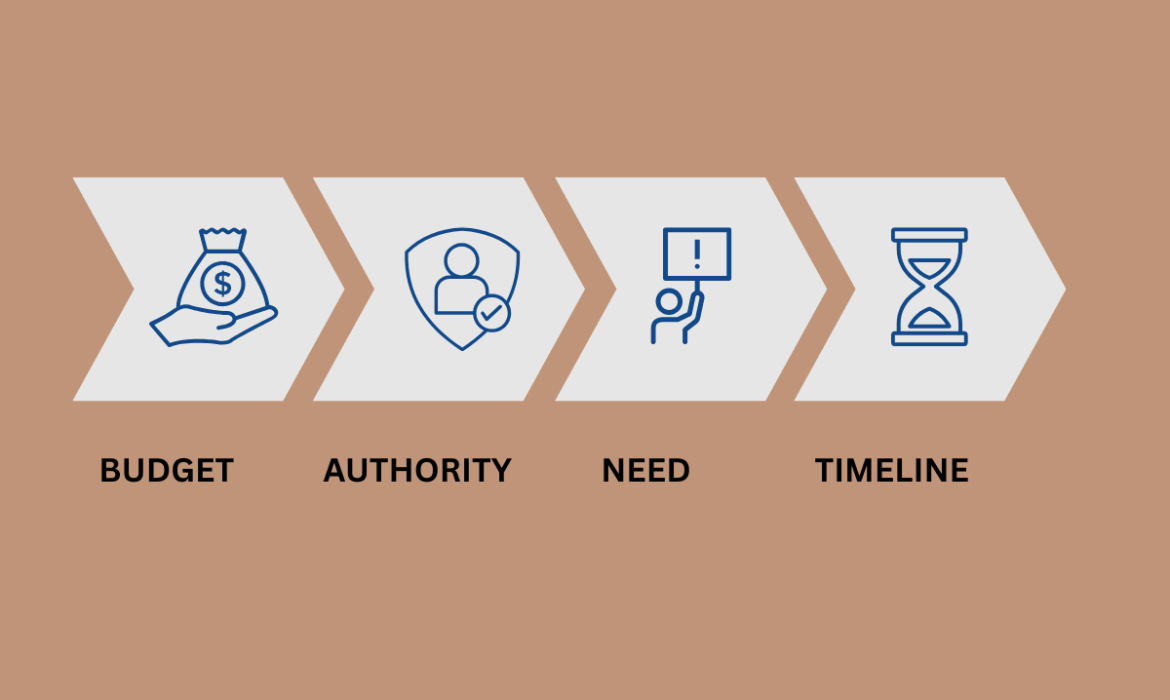
Developed by IBM, BANT has long served as a foundational model to determine whether a lead is worth pursuing:
- Budget: Can the prospect afford your solution?
- Authority: Are they the decision-maker?
- Need: Do they have a real pain point or requirement?
- Timing: Are they ready to purchase now or later?
While it remains a useful starting point, modern sales environments demand more agility, data intelligence, and personalization, which is where AI-enhanced BANT thrives.
2# The Power of AI in Lead Qualification
1. Automating Lead Scoring and Qualification
Traditional lead scoring relies heavily on manually assigned values or basic if-then rules. AI flips the script.
AI-driven systems use machine learning to analyze huge volumes of behavioral and firmographic data, website visits, content downloads, email opens, social interactions, and more. It identifies patterns and builds predictive models that determine how closely a lead aligns with BANT criteria.
Example:
Instead of manually checking if a lead has a relevant budget, AI models can analyze a company’s revenue trends, funding history, or purchasing behavior to score budget viability.
Key Benefits:
- Real-time scoring
- Data-backed prioritization
- Less guesswork, more accuracy
2. Identifying Need with Natural Language Processing (NLP)
One of the biggest challenges in lead qualification is understanding the true “Need” behind a prospect’s inquiry.
Natural Language Processing (NLP) allows AI to scan through call transcripts, chat logs, emails, and feedback forms to extract key insights. It doesn’t just read the words, it interprets sentiment, urgency, and recurring pain points.
Use Case:
A SaaS company using an AI tool with NLP might uncover that users repeatedly mention “manual reporting” and “data entry errors,” highlighting a clear need for automation.
Impact:
- Deeper understanding of buyer pain points
- Contextual personalization of sales pitches
- Better segmentation based on problem areas
3. Predictive Analytics for Timing and Intent
How do you know when a lead is ready to buy?
AI tools now offer predictive intent modeling, analyzing behavioral data to determine where a prospect is in the buyer’s journey. From recurring page visits to time spent on pricing pages, these signals help predict purchase timing, the “T” in BANT.
Example:
AI might identify that a prospect who has downloaded three whitepapers, visited the product comparison page, and requested a demo is likely to convert within 14 days.
Advantage:
- Timely engagement
- Reduced sales cycle
- Higher close rates
4. Determining Authority through Behavioral Mapping
AI can also assess the “Authority” of a contact by analyzing professional history, role-related behavior, and company hierarchies.
Tools like LinkedIn data integrations, job title mapping, and org-chart recognition allow AI systems to gauge whether a contact has the decision-making power, or if they’re a gatekeeper.
Benefit:
- Efficient routing to relevant sales reps
- Targeted communication to influencers vs. decision-makers
- Streamlined negotiation process
3# The Human Element: Why AI Won’t Replace Sales Reps
AI helps with data, but it doesn’t replace empathy or strategic nuance. Humans still play a vital role in:
- Interpreting AI outputs
- Tailoring messaging based on emotional cues
- Building rapport and trust
McKinsey notes that B2B buyers prefer “hybrid” interactions, a mix of digital automation and human engagement. The best sales teams use AI to empower, not replace, their human reps.
4# Overcoming Bias and Ethical Pitfalls in AI-BANT
Bias in AI systems is a serious concern, especially when models are trained on incomplete or skewed data.
To ensure ethical lead qualification:
- Train AI on diverse datasets
- Monitor outcomes for demographic bias
- Offer human override in scoring models
- Be transparent with buyers about data use
Example: A fintech company noticed its AI was downscoring leads from Tier 2 cities due to fewer digital signals, missing out on high-intent buyers. Adjustments led to a 22% uplift in lead quality.
5# Real-World Success Stories: AI + BANT in Action
1: B2B SaaS Platform
- Challenge: Sales reps spent 60% of time on low-quality leads
- Solution: Integrated AI to automate BANT scoring
- Results: 30% higher win rate, 40% shorter sales cycle
2: Enterprise Marketing Agency
- Challenge: Inconsistent follow-up timing
- Solution: AI tracked intent signals and flagged ideal outreach windows
- Results: 2X email response rate and 19% increase in conversions
3: IT Hardware Vendor
- Challenge: Difficulty identifying decision-makers
- Solution: AI-mapped org structures and flagged authority levels
- Results: 17% higher close rates and faster approvals
Conclusion:
The integration of AI into the BANT framework transforms lead qualification from a reactive task into a proactive, predictive powerhouse. Whether you’re trying to understand buying readiness or streamline resource allocation, AI enables precision without losing the personal touch.
Companies that harness this synergy will:
- Close deals faster
- Build stronger relationships
- Grow revenue efficiently
As AI technologies become more accessible and affordable, it’s no longer a question of “if” but “how soon” you’ll adopt AI in your BANT strategy.
I hope you find the above content helpful. For more such informative content, please visit SalesDemand.
FAQs:
1. Is BANT still relevant today?
Yes. BANT is still relevant, especially in B2B sales. While buying journeys have become more complex, BANT remains a useful framework when combined with intent data and modern CRM tools.
2.Can BANT be used by marketing teams?
Absolutely. Marketing teams use BANT to qualify leads before passing them to sales, helping ensure only sales-ready leads become SQLs.
3. What is the biggest mistake when using BANT?
The most common mistake is treating BANT like a rigid checklist. It works best as a guide for understanding lead readiness, not as a strict rulebook.
4. How does BANT help improve conversion rates?
By focusing on budget, authority, need, and timeline, BANT helps teams prioritize high-quality leads, which leads to better conversations and higher conversion rates.
5. Is BANT better than other qualification frameworks?
BANT is simpler and faster than many other frameworks. While advanced models like MEDDICC offer deeper qualification, BANT is ideal for early-stage lead assessment.